
Start Your Garden Now for Spring: A Simple Plan You Can Do Today

If you want a lush, productive garden this spring, the best time to start is… now. Winter is planning season—when you make the decisions that save money, prevent mistakes, and set you up for a stress-free planting day. In this guide, we’ll start your garden now for spring with a short checklist, a realistic month-by-month plan, and links to printable tools that make it easy.
Want plug-and-play calendars, plant lists, and charts? Grab my printable garden tools here: Where Things Grow Printables
Why Start Your Garden Now for Spring?
Seeds sell out early. Popular varieties disappear by late winter.
Timing matters. Your last frost date drives your seed starting schedule—and that’s easier to map now than in April.
Better yields. Planning rotation, spacing, and companions early prevents crowding and disease later.
Lower stress. When March arrives, you’ll be following a plan, not scrambling for supplies.
Quick Start: The 5-Step Winter Plan

1) Map Your Frost Dates + Zone
Note your USDA zone and average last frost date.
Choose what you want to grow (must-grow list first).
Use the Seed Starting Schedule Calendars to back-plan sowing dates by crop and zone.
Get them here → Printables: Seed Starting Calendars
2) Pick Your Layout (Beds, Rows, or Containers)
Sketch your garden beds. Decide on rows, raised beds, or containers.
Use Square-Foot & Bed Layout Grids to drop plants in with proper spacing—no guesswork.
3) Plan Companions (And Avoid Bullies)
Match friends (e.g., basil with tomatoes) and separate frenemies (e.g., onions away from peas).
My Companion Planting Guide gives quick yes/no charts and bed-by-bed pairings.
Get it here → Printables: Companion Planting Guide
4) Schedule Successions (So the Harvest Doesn’t Hit All at Once)
Stagger sowings of lettuce, radishes, beans, and cucumbers every 2–3 weeks.
Use the Succession Planting Guide to set dates now—future you will be thrilled.
Planner here → Printables: Succession Planner
5) Prep Your Seed-Starting Station
Gather trays, cell packs, labels, sterile mix, heat mat (for warm-lovers), and a simple shop light.
Use the Seed Inventory Sheets so you remember what you need to buy and what you have plenty of already.
Grab the printable → Seed Inventory Sheets

Month-by-Month: Plan Your Spring Garden (At a Glance)
Your exact dates depend on zone and frost date. Use the Seed Starting Schedule Calendars for the precise timeline by crop.
January
Set goals and budget, choose top 10 crops.
Order seeds (priority: tomatoes, peppers, herbs, cut flowers).
Sketch beds and map companion planting.
February
Start slow-germinating warm crops indoors (peppers, parsley).
Start cool flowers/herbs (sweet peas, snapdragons where suited).
Prep soil amendments and compost plan.
March
Start tomatoes indoors; begin brassicas for early beds.
Direct-sow peas, spinach, radish as soil allows.
Schedule succession plantings.
April
Harden off transplants.
Install trellises, hoops, and frost cloths.
Pot up warm crops if frost still lingers.
May
After last frost, plant tomatoes, peppers, cukes, beans, zinnias, and basil.
Mulch, stake, and label everything (future you: “thank you”).
All these tasks are pre-filled on the Seed Starting Schedule Calendars
Companion Planting Guide: Fast Wins for Spring
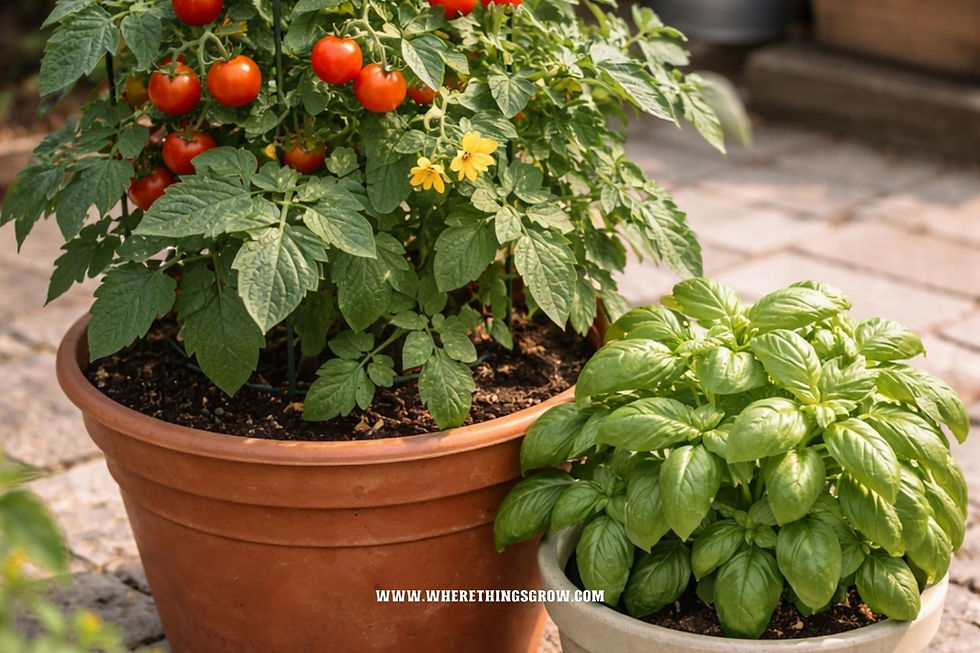
Tomatoes + Basil + Marigold: flavor, pollinators, and pest support.
Cucumbers + Dill: attracts beneficials and keeps things lively.
Carrots + Onions: share space well, deter pests.
Skip: Beans with onions/garlic; they don’t play nice.
Use the printable Companion Planting Guide to copy a proven layout into your beds.→ Get the Guide
Small Space? Start Containers

No yard? No problem. Try:
Cherry tomatoes in 5–7 gal pots with a sturdy cage
Bush cucumbers in 5 gal with a small trellis
Cut-and-come-again lettuce in shallow totes
Herbs (basil, chives, thyme) near the kitchen door
Read more about Container Gardening in Small Spaces.
Budget-Friendly Garden Setup (Traditional & Practical)
Reuse food-grade buckets (drill drainage holes).
Start with a simple shop light—no need for fancy.
Buy compost/soil in bulk with a neighbor.
Prioritize a soil test over random fertilizer.
Grab the Tools (and Relax)
Everything above ties to ready-to-use sheets you can print today:
Find them all here: Where Things Grow Printables
FAQs: Start Your Garden Now for Spring
When should I start seeds indoors?
Work backward from your last frost date. Warm crops (tomatoes, peppers) often start 6–10 weeks before last frost; cool crops (broccoli, cabbage) start earlier. Use the Seed Starting Schedule Calendars for exact dates by zone.
What’s the easiest beginner layout?
Raised beds or square-foot grids. They simplify spacing and weeding.
How do I avoid crowding and pests?
Plan spacing properly, rotate crops, and use the Companion Planting Guide to pair friendly neighbors.
I only have a patio—what can I grow?
Cherry tomatoes, lettuce, radishes, herbs, bush cucumbers, and dwarf peppers do great in containers. Check out our post Container Gardening Guide.
Final Word (from a practical gardener)
Around here, we prepare in winter and plant in spring. That’s how Grandma did it, and it still works. Make your plan now, stick it on the fridge, and let the season roll in. Your future self—with a basket full of tomatoes and a satisfied grin—will thank you.


Comments